
A Conversation with Char Booth
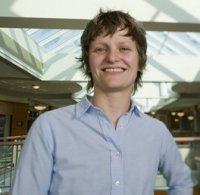
Photo Credit: Andy Snow Photography
Welcome to a special audio edition of In the Library with the Lead Pipe. Ellie Collier talks to Char Booth, E-Learning Librarian at the University of California at Berkeley and author of Informing Innovation: Tracking Student Interest in Emerging Library Technologies at Ohio University, a book length research report recently published by ACRL and available as a free download. We’ll be talking about Char’s path to librarianship, the importance of mentors, the process of writing and publishing her book and much more. I hope you enjoy it as much as I did.
 Click to stream interview audio
Thanks to Kelly Jensen and Emily Ford for reviewing my questions, to Brett Bonfield for his technical expertise and, of course, to Char Booth.
Transcript:
Welcome to a special audio edition of In the Library with the Lead Pipe. I’m Ellie Collier, reference librarian at Austin Community College and I’ll be talking to Char Booth, E-Learning Librarian at the University of California at Berkeley and author of Informing Innovation: Tracking Student Interest in Emerging Library Technologies at Ohio University, a book length research report recently published by ACRL and available as a free download which is linked to in the transcript. We’ll be talking about Char’s path to librarianship, the importance of mentors, the process of writing and publishing her book and much more. I hope you enjoy it as much as I did. Ellie: For starters, can you tell us a little bit about your background? Your path to librarianship? What you maybe did with undergrad or other jobs or interests that sort of took you here? Char: Sure, my path to librarianship was actually kind of short in a way. I left Texas to go to Reed College when I was still pretty young. I got a history degree up there. It’s in Portland, Oregon. And, like many people who graduate from liberal arts colleges, I had no idea what I was going to do. So I spent about a year just temping at Portland State University, trying to figure out what I was going to do. And my mom and I have this really good relationship. She’s a smart lady, and I was trying to figure out what to do and she suggested “Why don’t you look at library school?” And I thought, “Uh… No.” But then I looked into it and it was actually a strangely perfect fit. Sshe was just trying to get me back to Austin and the iSchool at UT Austin is where I ended up going. So, that was basically my path. I wish it was more dramatic, but that’s it. Ellie: That’s a very direct route, yeah. I just read that great post you wrote on advocacy on info-mational, which included your plans to sort of let that genuine passion you have shine through whenever you’re talking to faculty. So where along that very brief path did that passion develop? Char: What I was talking about is that I think a lot of librarians who work in higher education have … it’s not necessarily an inferiority complex, but we sometimes get a little bit self conscious when we interact with faculty in terms of how we advocate for libraries. We usually go about it really practically, “I can do this for you, I can do this for you.” But some of us feel a little bit shy about talking about our convictions as librarians. I think that most of us have very strong convictions about being librarians. We might feel a little bit of vulnerability around that, but I recently have had some conversations with professors, faculty members, and graduate students at Berkley and elsewhere that have really let me know that showing people the veracity of my passion about librarianship and my advocacy for it really can help them get insight into what brings people to academic libraries, what we can do for them, what we can do for students – the real breadth and depth of our profession as opposed to people’s impressions of it, which are never correct. They’re just not complete, they don’t have enough depth. So, anyway, all this passion really came from my experience at Reed College with the research culture there and the library culture there. It’s an extraordinary undergraduate library. It supports students. Kids at Reed are invariably super nerds and we’re really self-interested researchers. We all have to do these really intensive senior theses and we live in that library. And they’re really sweet to us. The librarians are extraordinary. They let people drag cots in there. And when we all graduate we burn copies of our thesis in front of the library and it’s this crazy revelry. It just really instilled this idea of a research culture and libraries supporting students and I’ve never forgotten that. It’s what I aspire to. Ellie: That’s fantastic! Char: Oh my god, yeah. It really is. It’s amazing, I miss it. Ellie: I’m one of those anomalies, I think, that I managed to get into library school having almost never entered any school library. And I’m in community colleges now, and I love it, but yeah, I think I went into my library twice at Penn State, ever, the whole four years. Char: You know what’s funny, I was always in the library at Reed, but it was really the place of it that I loved. I didn’t take enough advantage of the reference librarians there, which I find really ironic now, but I was just, “Oh, I know it all. I can do it. Whatever.” And then I realized how ignorant I was. It’s kind of incredible how much I didn’t know at the time. So that’s really filled me with this desire to help kids know that they don’t know everything, especially smart kids. And I’m at Berkeley now, and they think they know what’s going on, but they totally don’t. Ellie: So you went and got a second masters in instructional design. So what led you to that degree and what’s that brought in to your work as a librarian? Char: Oh so much, so much. I’m so glad I did that honestly. I got a second masters, it’s a Masters in Education, and it’s focused on instructional design and Computer Education and Technology, so this idea of bringing technology into education and how you teach that and how you learn about that and all those things. I got that degree at Ohio University in their College of Education while I was working as a reference and instruction librarian there from ’06 to ’08. Ohio University is an extraordinarily supportive library system in terms of professional development. They’re excellent. They basically paid all of my tuition, save maybe… Ellie: Nice. Char: …5-10% of it. Very nice. And I just worked really hard on it. I discovered that I’m really fascinated by learning theory and pedagogy and all of these things. And it gave me a lot of practical skills: in flash design, in instructional design, and all of these things that, had I known they existed in library school, or had they been subjects that were available in my program I really would have gone after. But I just didn’t know that’s what I needed to do. I also met a lot of K-12 educators who are full time teachers. They have a lot of strategies on how to motivate people. They have a lot of insight into how people learn. I just realized that I had not been taught enough about teaching to be a librarian. I think that’s an endemic problem in library education. We’re not taught to be educators even though that’s what we are. I think that in order to thrive we’re going to have to focus more on that in general. Ellie: And that ties back too, to what you were saying about talking to faculty and I think it was Emily that commented on your post too that being able to speak their language just helps so much. Char: Oh my god yes, totally. Totally. And librarians are really good at speaking other people’s language. That’s what we do. That’s what we do at the reference desk. That’s what we do when we catalog books. That’s what we do when we design all these different information products. We’re very good at having insight into other people’s interests, research cultures, disciplinary vernaculars, all of these things. We’re adaptable to that. And tying that with the educational missions of libraries is very natural. And it helps us advocate for what we do because we can couch it in terms that are understandable, not only by different disciples, but different levels within those disciples. Higher education institutions are giant complex hierarchies and you’ve got to be able to get at each level of that hierarchy in order to really be useful, I think. Ellie: So speaking of Ohio and of all these sorts of different areas we pull through, I know that you are a Texan at heart. And so now you’re been off in rural Ohio, now you’re off in Berkeley. What’s it been like going such different places? What sort of culture shocks, if any, have you run into? Char: Have I run into culture? Yeah. Are you kidding? No, there’s no difference between Ohio and Berkeley, I’m sorry. [laughter] Yeah, totally! I think a lot of us who are kind of early career librarians, you know, will go, get our first job and it might be somewhere interesting where we never thought that we would live. Case in point, Ohio? I didn’t really know much about Ohio. Or the University. It was a job that I got and man was I lucky because it was a perfect fit. It taught me an extraordinary amount about my own interests, how to be a good librarian because I was supported and mentored by everyone I worked with. Extraordinary place. I cannot say enough positive things about it. It’s a model institution. I also really had the opportunity to get outside my urban self. And learn that there’s really no sense in thinking that one can only live in one kind of place. It’s that same kind of ethic of adaptability. I ended up adoring living rurally. It’s been actually a bigger culture shock moving to this urban area where, apparently everyone wants to live, but it’s a real challenge. It’s a very competitive culture out here in general because it is so desired. The opposite was true in this odd way in Ohio, but it was so wonderful to live in a place that was really built on community and making relationships that lasted and were supportive and it was just such a friendly and kind place to live. And it was just gorgeous. And institutionally every university has a different institutional culture and I’m really fascinated by that. And just the idea of regionalism in general. So, I really am interested in the places that I work and my goal is always to love my job, so I only go places that I truly believe that I can do that. I think in terms of development in one’s profession, it’s excellent to work for different types of places because it gives you such a better perspective on what you can offer, the kinds of problems that can develop, the kinds of things that can develop to address those problems and it’s good, not always to move too much, but different types of experiences are really important. But, in terms of comparing things to Texas, I mean, there’s really no comparison. Ellie: Of course, of course. So, switching gears, you were named a Mover and a Shaker and you were selected for the first class of ALA’s Emerging Leaders. What motivated you to try for those opportunities? Char: When I applied for Emerging Leaders it was super early on in my career at Ohio University. I decided to apply for it because I’m the kind of person that just goes for professional development opportunities because I like to learn about stuff and I’m really a very collaborative person and I thought it would be a good way to get insight into the hugeness of ALA, which can be really inscrutable when you’re getting started. ALA’s this giant organization, you don’t even know where to turn in it if you want to get involved. So I applied for that. I was encouraged to apply for Emerging Leaders through a couple of different mentorships that I’ve had. I’m also a person that really believes in forming professional connections and being mentored. I naturally gravitate towards mentorships, in terms of me being a mentee, because I really respect the knowledge of people who have been around the block a few more times than I have in terms of their careers. It’s really, really important to perceive how we can create mutually beneficial professional relationships. And I’m not talking about some kind of noxious ladder climbing here. I’m talking about getting good work done, learning from people and having that be a really validating personal relationship builder in your career. And, I don’t know, I’ve got really good manners so people tend to like that in the folks that they work with. So, anyway, I think that one of my strongest mentors from library school, Dr. Roy, who is ALA past president, I think she encouraged me to do it, which is great. I like to have an impact on the things that I care about. he way you do that is by taking those kinds of opportunities when they come to you. Emerging Leaders was a really good experience for me. And of course it’s always about the people that I end up meeting. I was able to meet and work with Jenny Levine, who writes The Shifted Librarian and who’s an amazing person and one of my closest librarian friends now. She was one of my project groups’ in Emerging Leaders contacts within ALA. So that was awesome. That’s the kind of thing that happens when you do things like Emerging Leaders or you get nominated to be Mover and Shaker. At the reception at the Mover and Shaker thing I met Michael Stevens and Meredith Farkas. I work with them both, I love them both. And that’s how it goes. So it’s all about making personal connections out of professional opportunities and doing so in a way that is genuine and respectful and intent on the greater good. I think that’s really, really critical. Ellie: I want to second what you were saying about networking, not in that awful way. Char: Because it sounds all circuit boardy. It makes people seem like implements that have these connections that may facilitate things and make things happen. But really it’s another aspect of enjoying the work that you do and making the work that you do have more impact. Ellie: Yeah. And, I mean, I would even call probably almost everyone that I’ve met in those opportunities and remained friends with, friends, so to me, even though, I know that it is networking, it never feels like it at the time, it never has any of those sort of negative connotations. Yeah, I just sort of want to replace that with the idea of friendship. Char: Absolutely, and when you’re getting started, networking is a terrifying concept. I would hear the word networking, I’d be like, “Oh my god, I don’t know how to do that. I don’t even have business cards, how am I supposed to network with anyone?” Networking, all it is, is building relationships that originate in your genuine interest in what you do. Ellie: Well said. Char: and finding other people that can help you do that. And that you can help do that. And it’s awesome. So, I’m all about that. You have to learn how to communicate well. It’s about being nice and not being opportunistic. Ellie: Yeah. So you do tons of stuff. You’ve had all these presentations, the Cyber Zed Shed, you Skyped into a presentation, I’m sorry I don’t have which one in front of me… Char: Oh man, that was scary. Ellie: You’ve done ACRL, Computers in Libraries, Future of Libraries. I’m sure I’ve missed some. How did you get hooked up with some of those? How have they impacted your career? Char: I just applied for them. A couple of the presentations I’ve done have been invited but most of them are the kind of thing where you submit your proposal and they accept you or reject you. And I’ve got plenty of rejections. It’s about, does your idea fit the program and do they have space for you and all that stuff. And I’m weird, I like to present. I really, really like it. I hated it when I started. I was as nervous as anybody else, but I’ve just grown to love being in front of people in a way that is challenging to me and hopefully engaging and interesting for them in terms of the content that I’m talking about. It’s a great challenge and that’s really what it’s all about. So most of them I applied for, a couple of them I’ve been invited to. It’s amazing to watch a good presentation and I try really hard to give a good presentation. And it’s an excellent way to kind of develop my skills in presentation technology and different ways to try to express ideas. I’m really interested in visual design too, so when I make a presentation I like it to be pretty beautiful, I try. So it pushes you forward. And again, it’s a great way to connect with people and hear really good questions and think about the things that you’re doing in ways that you wouldn’t have ever thought about because you get this feedback from other institutions. You talk for 20 minutes about something that happened at your place and then 10 people come up asking questions through their institutional lens. And [you realize], “Oh my god, that’s a completely different working culture, I never anticipated that problem. In that context it would work totally differently.” It’s so important. Presenting is very fun. It was never something I had to do for tenure. It just kinda happened. But you do have to have that professional development support. It’s expensive to travel. One of the reasons I was able to do that, I should just mention this again, is that OU gave such extraordinary travel funding. As long as you’re involved, as long as you’re presenting, as long as you’re active in the things that you are doing, they would fund you. The same is true at Berkeley, maybe to a lesser extent. OU is really out of the ballpark in terms of what they do or did for people. The funding situation all over the country is a little dicey right now, so I may be speaking of things that are not quite the same. But that was a great opportunity for me. Ellie: Do you have any favorite conferences or presentations you’ve given? Char: I like ACRL a lot. My first presentation, the one that really gave me the idea that I could enjoy presenting professionally at conferences and that it was a thing that I wanted to continue doing, was Cyber Zed Shed back, I think it was in, was it ’06? ACLR ’07? It was the first thing I ever presented and I was scared out of my mind but it went really well and I enjoyed it. I like the vibe at ACRL. I gave a presentation at the last one in Seattle. It was extraordinary. It was excellent. The audience was great. I cracked them up the whole time, which was rad. I like ACRL. I do. Ellie: Nice. So also speaking of all of the stuff that you do, how do you stay sane? Do you make an effort to divide your personal and professional life out? Do you blend it all together? Char: You really want to know what I do? I get up at 4 or 5 in the morning every day. Ellie: Oh my goodness. Char: That’s what I do. So I don’t really work much at night. That’s how I divide my personal and professional life. I don’t work at night, but I certainly work at 4 or 5 in the morning. I write a lot and if I have a presentation I’m doing or something, that’s when it gets done. The early morning hours are really good for that because there’s really no other distractions. It’s very quiet, it’s a very focused time and I’m obviously a morning person. So that’s good. You can’t be happy professionally if you’re not happy personally. So, you can’t just privilege one and not the other. Yes, I work very hard, but I also have a lot of interests and I care a lot about librarianship. I care a lot about what I do. So it brings me great personal satisfaction and joy and I’ve met a lot of people in my profession that are true friends and that do what I do, but I have plenty going on outside of that. And that’s good. Ellie: So you’re getting up super early in the morning, is all of the sort of stuff we’re talking about stuff you take care of during that time or is any of it on work time? Char: I’m really busy at my job. I have an amazing job. I do a lot of really interesting things and a lot of them involve a lot of networking and outreach and meetings and building different collaborative partnerships at Berkeley. It’s difficult to do anything but my job at my job. That said, I am encouraged to work on the types of writing things that I work on when I can. It’s not discouraged by any means. I have a lot of support from my administrators, from my bosses and I work for some pretty awesome people at Berkeley. So, if I have the time, it’s not like the time is not mine to work on professional stuff, but I’ve got a lot of irons in the fire. That’s what important at my work, but yes, I am supported in my professional activities as well. Ellie: Excellent. So talking about writing, ready to transition into the book a little bit, can you talk about the process of writing that, a whole book? And was that one part of your work at Ohio or again, sort of totally extracurricular? Char: The book that I just published through ACRL, it’s available as a free download with a sample research instrument, a sample questionnaire, if anybody wants to download it and try to do the same environmental scan about students and technology, that’s available. You can also purchase a hard copy, but it’s definitely meant to be accessible to the widest possible audience. Elile: That’s fantastic. Char: That project originated as local research at Ohio University. I was on this technology team and I worked with my manager, another mentor of mine, Chad Boeninger, who’s an extremely smart librarian. He has a blog called Library Voice that’s really excellent. He really had this idea that we should get better grounded in the technology and library culture of our actual institution in order to develop better technology products and I completely concurred, so spearheaded this long term research project and the report that I produced for that. I was also simultaneously working on it as my master’s report for my education degree. Those two documents merged, and then I expanded them a lot and ended up writing on that for another 6 to 8 months and published that as the actual book/research report through ACRL. So, it was a document that had a long life span and a lot of different iterations that really helped me get excellent insight into what I was trying to say. It’s local research findings, but it’s couched in this language of how to research your own institution to understand what it’s trying to tell you about what it needs from its library, not just in terms of technology, or this kind of minimum insight into the students that you’re serving. “Do you like the library? Yes or no?” It’s about really getting a handle on the culture in which you exist because that’s the culture that you serve and it’s different than any other library culture on the planet because that’s the way it works. Ellie: I think that’s fantastic. Char: What I’m trying to do is inspire people to couch themselves in that culture. You reflect it, those are your people. Don’t stop looking at national studies, read the national studies and then use their research instrument to inspire your own research. See if your people are a reflection of those people, or if they’re not a reflection of those people. Then you can build products that respond to their requests. It’s very important. Ellie: I think it’s great that you touch on that. I find that a lot being in a community college setting, where they talk about, well, incoming freshman this… I’m like, mmmm, yeah… not my audience… So yeah, thank you for that. Char: Part of the reason I wrote this report in such detail and tried to really show how specific the library culture at Ohio University was is because people arrive at different institutions of higher learning based on a variety of different factors, their class privilege, their prior academic performance, their location, their region… It’s this really complex demographic and social and cultural admissions process. So that creates these little microcosms that are completely unique and that libraries can learn to respond to. And work with. And understand. Instead of just saying, “We’re the library. You need some help?” Being a person that’s interested in that kind of regional, institutional, organizational culture, I think we should learn how to gain better insight into it. And ongoing insight, not just a one shot survey, but figure out how to figure out your context. Ellie: Mmmhm. And so, moving on with the process of the book, what was the publishing process like? Did you approach ALA? Did they approach you? What was the timeline for publishing? We already talked about writing, but… Char: I’m working on a different book project right now on instructional technology, pedagogy in libraries, reflective practice, all of those different things. That book I was approached by ALA editions to do as a consequence of being named a Mover and Shaker, which is something that I think is a common experience for folks that get that award. They get a lot of publication opportunities out of it. Which is great. But, for the research report, I just cold called Kathryn Deiss at ACRL. Cold emailed I guess you could say. I had met her through Jenny Levine and I thought maybe the project might be of interest to her. I had the good fortune to also be edited in that process by Joan Lippincott, who’s really an amazing thinker in our profession in terms of these issues of technology in libraries and integrating our institutions into the institutions that support us and things like that. So, it was a really serendipitous process. The entire publication timeline, I guess was about August to April. So however many months that is. I can’t count very well apparently. But I had already been writing on it a while, as I said. A document existed, it just needed to get shipped into shape so to speak. So, I revised it, I worked on it. Did a lot more analysis. Formatted the document itself. And they let me design the whole thing. Which is an incredible experience by the way. Cover to cover. I designed that book. And it was wonderful. Thank you Katherine, thank you Joan. Thanks to Dawn Mueller at ALA. All of them were great during that process. Ellie: So you designed it into the PDF too? How did it come about that they offered the free version? Char: Well actually, I pretty much insisted on that. I always imagined it as a free download. I didn’t even think that it was going to be in a print publication version, but one thing led to another and it ended up being a good length for a soft cover research report. So, that’s fine, but I always imagined it as a free download. I really considered that it’s primary form. And of course it’s great that it’s available in a different format, but in my mind it originated as a web based document, download. Ellie: Alright, so, moving on. I know that the TechSource people are going to cover a lot more of the content of it, so I just want to latch onto the one idea that sort of struck me, which was that one of the most interesting aspects of that Skype project was your open, transparent reporting on the decision to sort of reevaluate the service. And I really like this shift towards publicly discussing and learning from projects even when they might be deemed failures. At my college we’ve been doing an IM pilot through Meebo, and we’re considering dropping that for various reasons. Can you talk about the decision to reevaluate the service and who all’s involved in that and what sort of feedback it was met with? Char: Sure. What you’re talking about is this experimentation that we were involved in at Ohio University with Skype, using Skype for different forms of public service. We created a video call kiosk and did a pilot with that and we also set up what we called Skype In Reference on our reference desk, so people with Skype accounts could call and talk to a librarian that way or chat with them. The survey project came out of the fact that we were able to do so much experimentation at OU. The working culture is really supportive, a lot of people with a lot of creative energy in terms of creating library services that are worthwhile and innovative and just trying out all these new products, it was really fun. But at the same time, the more products you create, the more time it takes to staff them and the more that you want to make sure that they’re actually working out for you. And the Skype project was basically the first thing that we had done that was … You might call it ahead of it’s time, you might call it misdirected, you might just call it too much. So, it was a lot of work to create and staff, and it drew on our relationships with the systems department and it was a great experiment, but at the same time, the video kiosk wasn’t used consistently enough to really merit us being on it all the time, in terms of our talking heads on the screen. Our decision to reevaluate the service is this idea that a lot of people talk about, having things in constant beta and changing them up. It’s really about the flexibility to address the inevitable problems that come up. The fact that we are able to do that so transparently at OU is what gives us the motivation to talk about it and say, look, this is how we changed things, and this is how we tried to address the fact that the service wasn’t used enough. This is the model that we took on to try to mitigate those problem. When you work with emerging technology in libraries or in higher education or wherever, you’ve got to be able to switch gears when things don’t work right. We’re all treading new ground, not only in the technologies that we’re using, but like I said with the specific institutional cultures, different types of IT relationships. You can’t rely only on the testimonials of others. You’ve got to figure out your own context before you know how to make something work. So that was really where this idea of gaining more insight into people and what technologies would work and what would not work. That’s where the idea originated. To stop creating services from the seat of our pants and start trying to do it from a more informed vantage point. And the service being reevaluated, it’s an ongoing process. More people continue to adopt Skype and they’re still offering the service at OU in different forms, but they’re reevaluating having Skype be the element on that information kiosk that is called when someone says “ask a librarian.” They might just switch it to text chat because it’s easier for people. So it’s really you want to triangulate what’s the way people want to be able to contact you and go there instead of just the thing you think is cool at the moment. Ellie: Amen. That was my last official question for you, other than sort of, what’s next on your list? Do you have any latest technology thoughts? Something that’s caught your interest that’s fun? That you’re working on now? Char: So much actually. I mentioned before that I’m writing another book on library education. A lot of what I used to do at OU had to do with emerging reference technologies and now I have a lot more to do with teaching and learning and technology in those areas and those aspects. They all kind of blend together, but I’ve been really doing a lot more instruction and a lot more training and thinking about how to get people to use different types of learning technologies in libraries and how to connect the research mission of Berkeley with the Berkeley libraries via different technological means, so that’s on my mind right now in a lot of ways. In terms of what I’m doing outside of my immediate job, I’ve been thinking a lot about different types of interactive technologies. The iSchool at Berkeley is really excellent and it’s not really in the library paradigm anymore, but there was an exhibit on tangible user interfaces, student projects, this kind of hyper interactive type of design that involves a lot of immediate user feedback and very tangible, very kinesthetic technologies and they’re very interesting. I’m interested in seeing where that type of design goes for classroom interaction. I’m going to be keeping my eye on that for a while. Also, a colleague of mine at UCSD, a friend and colleague and also my perennial editor, Lia Freedman, and I are talking over this project that we want to call Bibliovox, which is this idea that it’s important to tell library stories in a way that retains our institutional memory and does what I was talking about earlier about talking about our passion, exposing a little bit more of our personality rather than just this caricature that a lot of people have in their minds about who librarians are and why we’re led to this profession. I think that we’re a profession of people who care deeply about what we do and about each other and about our patrons and about information and knowledge and research. And we are good people and there’s a lot of stories that need to be told. So what we’re thinking about is creating this online podcast archive if you will. Maybe a blog that people can call into, answer a specific question, or create podcasts of each other talking about their memories about libraries, their inspirations about the profession, how they think it’s changing. It’s kind of inspired by that project StoryCorps that you’ll periodically hear on NPR. So that’s another long term idea. And I really would like to try to think about how to replicate the research I did at OU across the University of California libraries. Who knows if that will happen, but it seems like it would be a really valuable project. I guess that’s another professional thing that I’m interested in doing and hopefully achieving. So, yeah, there’s a lot of stuff going on. But that’s the way I like it. Ellie: Excellent. Is there anything else you want our readers to know that I didn’t ask? Char: I’ve talked a lot about different types of working cultures and how I really think it’s very important to try actively to enjoy your job and to create a positive working culture at the place that you find yourself. I feel like this is worth mentioning because I talk to a lot of people right now who are getting out of library school and are having a really hard time finding jobs. I think a lot of us are getting funding cuts. A lot of us are worried about freezes and layoffs and all those types of things. During this type of time it can get pretty hairy inside academia and it can get really fierce and it can get kinda ugly. I think that this type of crunch time is a really good opportunity to try to foster more supportive workplaces and workplaces that give a lot of opportunities for internal professional development and collaboration. If you can’t go gallivanting around the country, see lots of different conferences, there’s plenty of stuff you can do locally to train each other and work with each other and build the relationships that make workplaces pleasant as opposed to unpleasant. Maybe this is just my cult of manners thing, but I really believe in it, why go to work at a place that doesn’t feel good to go to work at? It doesn’t make sense to me. I really think that people should cultivate an ethic of professional, collaborative, supportive collegial ethic. I think it’s absolutely essential. So mind your manners basically. Thanks mom! Ellie: Indeed. Well thank you so much Char, this has been fantastic! Char: Thanks for the interview. You’re a friend of mine, so it’s kind of funny to be in this situation. I’ve been really fortunate to work on projects that I really really care about and have had the opportunity to think really hard about and it’s awesome to be able to talk about them. If anybody reads the report and has any questions about it, just please let me know. I’m a nerd and I love talking about research. Just hit me up, my email’s in the back. All right? Ellie: Thanks for tuning in and as always, we welcome your comments.
Pingback : interview x2. « info-mational
Pingback : Char Booth Interview « What Now?
Thanks for bringing us Char Booth’s refreshing perspectives on librarianship.
I’m about a third of the way through Informing Innovation and appreciate its candid and thoughtful assessment of Library 2.0 implementation. Char’s encouragement to tailor the tools to local needs is right on. Her analysis is also very helpful to those of us outside the library profession who evaluate and implement technology.
Pingback : An Accidental Char Booth Morning « Free Moth :: Flutterings